Decoding Crochet Chart Symbols for Digital Design
If you work in the textile industry, run a pattern-based business, or simply enjoy the art of crochet, you know that precision is everything. Translating a physical stitch into a digital instruction set can often feel like trying to fit a square peg into a round hole. Standard word processors and design software are built for text and general imagery, not for the specific nuances of yarn crafting. This is where a specialized toolset changes the game. Rather than relying on clunky clipart or confusing text abbreviations, having a dedicated typeface that maps directly to stitch types allows for a level of clarity that your audience will appreciate.
Visual Clarity and Technical Precision
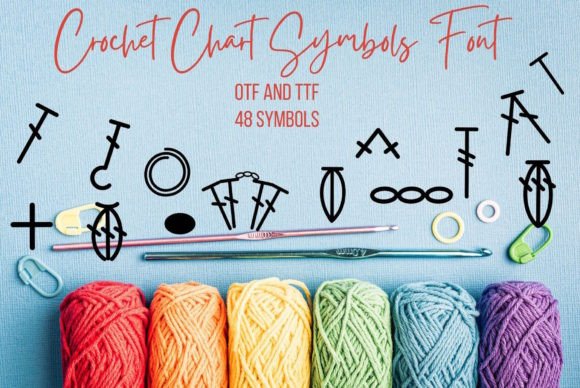
The core appeal of the Crochet Chart Symbols set lies in its functional design. It isn't about flashy serifs or artistic flourishes; it is about communication. The visual characteristics are rooted in the standard conventions of the craft, meaning the symbols look exactly how a crocheter expects them to. This reduces cognitive load for the reader. When someone opens your PDF pattern or views your tutorial, they don't have to guess what a specific icon means. The "personality" of this asset is utilitarian yet clean. It serves as a bridge between the chaotic nature of a tangled skein of yarn and the organized structure of a written instruction manual.
Because the package comes in both OTF and TTF formats, compatibility is rarely an issue. You can use these symbols in standard word processors like Microsoft Word or design heavyweights like Adobe Illustrator. This versatility is crucial for small business owners who might not have access to high-end design software but still need to produce professional-looking pattern sheets. The ability to resize and color these symbols means they integrate seamlessly into whatever brand identity you have established. Whether you prefer a minimalist black-and-white look or a vibrant, color-coded system to denote yarn changes, the font adapts to your needs.
Practical Applications for Creators and Entrepreneurs
For designers and publishers in the crafting niche, the utility of a dedicated symbol font extends far beyond simple instruction manuals. Consider the packaging design for a new line of yarn. You can use the popcorn or bobble stitch symbols as decorative elements on the label to instantly communicate the texture of the yarn inside. This creates a visual shorthand that experienced crafters will recognize immediately, adding a layer of professionalism to your product presentation.
Content creators and bloggers can leverage these assets to enhance their digital presence. Instead of embedding static images of charts in your blog posts—which can slow down page load times and blur on different screens—using a font-based symbol allows for crisp rendering at any resolution. This is particularly useful for social media graphics. Imagine creating an Instagram carousel explaining a complex stitch combination; using clear, scalable symbols makes the content more engaging and educational. It transforms a static tutorial into a dynamic piece of visual communication.
Strategic Branding and Audience Trust
Typography plays a silent but powerful role in brand perception. When you use consistent, recognizable symbols across your pattern releases, you build trust with your audience. They begin to associate that specific visual language with the quality and reliability of your work. This is a subtle form of brand identity building. If your competitors are using blurry screenshots or hand-drawn sketches that lack consistency, your clean, typographic approach will stand out as the industry standard.
Moreover, the inclusion of front and back post stitches, as well as combined and puff stitches, ensures that you can document complex patterns without running out of glyphs. This comprehensive library means you aren't halfway through a design only to realize you lack the specific icon for a "magic circle" or a specific direction indicator. It allows for a smoother workflow, reducing the friction between your creative ideas and the final product.
Integration and Workflow Efficiency
One of the most practical aspects of this collection is the inclusion of PDFs detailing uppercase and lowercase letters, abbreviations, and descriptions. This acts as a decoder ring for your workflow. It ensures that if you are collaborating with other designers or tech editors, everyone is on the same page regarding what each symbol represents. In a professional setting, consistency is the hallmark of quality. A mismatch in stitch symbols can lead to errors in the final product, which can be costly for a business's reputation.
When evaluating how to integrate this into your current design assets, consider the hierarchy of your documents. The symbols are designed to be legible at small sizes, making them perfect for dense instruction charts where space is at a premium. However, because they are vector-based (as fonts inherently are), they can also be scaled up significantly for instructional posters or wall charts without losing quality. This scalability is a major advantage over raster-based images.
Ultimately, adopting a specialized tool like the Crochet Chart Symbols font is an investment in clarity. It signals to your audience that you value their time and experience, providing them with the clearest possible path to creating beautiful finished objects. For the modern crafter, designer, or entrepreneur, it is a small change that yields significant dividends in professionalism and user satisfaction.