Monogram Flower: A Garden in Every Letter
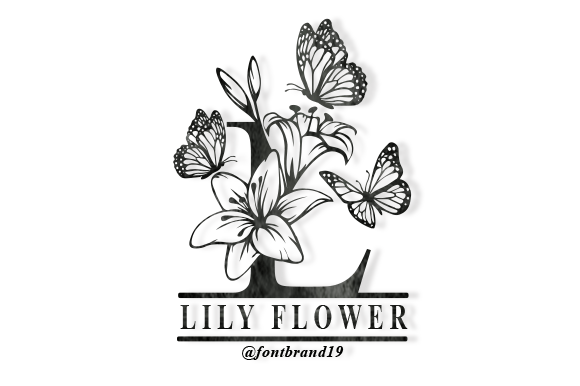
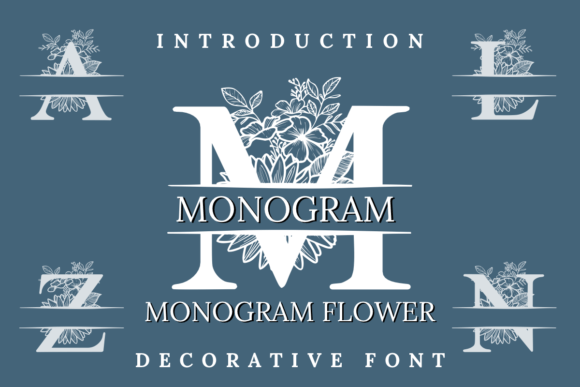
There are typefaces that simply convey words, and then there are typefaces that tell a story before you even read a single syllable. Monogram Flower falls firmly into the latter category. It is a specialized, premium font that transcends standard typography by weaving intricate botanical illustrations directly into the letterforms. Imagine a serif structure where the thick strokes are replaced by rose petals, or a crossbar that transforms into a delicate vine. This isn't just a typeface; it is a piece of design assets collection that acts as a visual shorthand for elegance, nature, and bespoke luxury.
Unlike standard sans serif font families that prioritize utility and screen legibility, Monogram Flower is a display font designed to be the hero of your layout. It captures the essence of modern typography while paying homage to Victorian-era floral engravings. The "personality" of this font is undeniably romantic and sophisticated. It carries a weight of tradition but uses it in a way that feels curated rather than dated. For designers and business owners, this specific aesthetic solves a massive challenge: how to instantly communicate "handcrafted," "organic," or "luxury" without relying on stock imagery or complex illustrations.
Strategic Applications: Beyond the Wedding Invite
When we think of floral typefaces, the mind often jumps immediately to wedding invitations or greeting cards. While Monogram Flower certainly excels in editorial design for the stationery market, its utility extends much further into commercial and branding spaces. The key to using this font effectively is understanding where its ornamental nature adds value rather than clutter.
In packaging design, for instance, Monogram Flower is a powerhouse. Consider a boutique skincare line or a high-end tea brand. Using this font for the product name creates an immediate visual connection to the ingredients or the experience. It suggests that the product inside is curated and natural. Because the font carries so much visual detail, you often don't need additional graphics; the typography is the design. This simplifies the layout process for small business owners who may not have access to custom illustration services.
Furthermore, in the realm of logo design, this typeface offers a distinct advantage for specific niches. Businesses in the hospitality, beauty, wellness, and artisanal food sectors often struggle to find a creative font that feels unique. A generic script can look cheap, while a standard serif can feel too corporate. Monogram Flower occupies that "Goldilocks" zone—it is professional enough for a business card but artistic enough for a social media banner. It creates a brand identity that feels established and detail-oriented.
Mastering Visual Hierarchy and Readability
One of the most common pitfalls with decorative fonts is the sacrifice of readability. However, Monogram Flower is engineered to balance artistic flair with structural integrity. That said, it requires a thoughtful approach to visual hierarchy. Because the letterforms are complex, they command attention. If you use Monogram Flower for an entire paragraph, you will create visual noise that tires the reader's eye. It is not a body copy typeface.
Instead, use it to anchor your design. A headline set in Monogram Flower creates a strong focal point. To support this, you need a secondary typeface that is quiet and clean. This is where font pairing becomes critical. A classic combination is pairing Monogram Flower with a clean, geometric sans serif font or a simple serif font. The simplicity of the body text allows the intricate details of the floral headers to shine without competing for attention.
For digital applications, such as web design or social media graphics, sizing is everything. On Instagram or Pinterest, where users scroll quickly, the floral details of Monogram Flower need to be large enough to be legible. If the text is too small, the petals and swirls will blur into a muddy shape. Always test your designs at the actual viewing size. In web design, consider using this font for the main H1 hero text, but switch to a standard system font for navigation and sub-headers to ensure fast load times and accessibility.
Practical Guide: Choosing and Licensing
When evaluating Monogram Flower for your next project, you must look beyond the initial "wow" factor and assess the technical specifications. As a commercial font, licensing is the first hurdle. Ensure that the license covers your intended use—whether that is for physical products (merchandise), digital ads, or app interfaces. Many premium fonts have different tiers for licensing, so verify this before incorporating the font into a client's final logo files.
Next, examine the included styles. Does the font family include alternate characters? A high-quality floral typeface often includes different sets of swashes or ligatures. These features allow you to customize the look of specific words, ensuring that two "A"s in a logo don't look exactly the same, which adds to that authentic, hand-drawn feel. Check if the font includes a handwritten font or script font companion within the family, which can be useful for creating a cohesive yet varied typographic system.
Finally, perform a "squint test." Step back from your screen or print out a proof. At a glance, does the text read as a word, or does it look like a decorative blob? The best modern typography