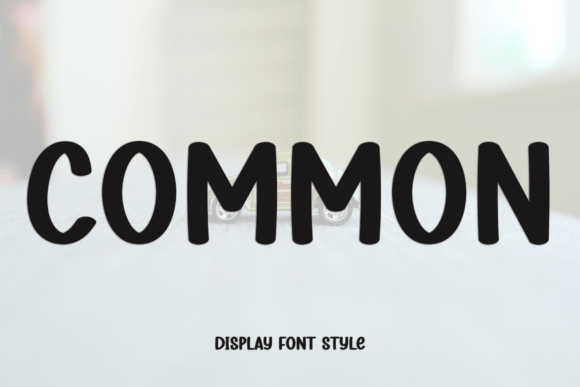
Common: The Friendly Font That Works Hard for Your Brand
You’ve probably seen a typeface like it before—the one that feels instantly familiar, like a conversation with a good friend. That’s the quiet power of Common. It’s a casual sans-serif font, but that description barely scratches the surface. Its laid-back vibe is tempered with a subtle, almost effortless elegance, making it a surprisingly versatile workhorse for a wide range of projects. With its clean lines, gently rounded edges, and just a hint of variation in its stroke width, Common manages to be both approachable and full of character. It’s the kind of typeface that doesn’t shout for attention but earns it through sheer, reliable warmth.
More Than Just a Friendly Face: Understanding Common’s Personality
At its core, Common is about balancing opposing qualities. The rounded terminals and open apertures give it a soft, welcoming feel, perfect for brands that want to project approachability and trust. Think of a local coffee roaster, a boutique wellness studio, or a children’s educational app. Yet, the consistent letterforms and clean construction prevent it from feeling childish or unprofessional. There’s a modern typography sensibility at play here; the design feels current without chasing fleeting trends.
This duality is what makes Common a premium font asset. It’s not a display font designed for one dramatic headline, nor is it a neutral workhorse like Helvetica. It occupies a sweet spot: a sans serif font with enough personality to become a recognizable part of a brand identity, but enough restraint to handle body text with clarity. When you choose Common, you’re not just picking letters; you’re selecting a tone of voice—conversational, reliable, and subtly sophisticated.
Where Common Truly Shines: Practical Applications
The real test of any creative font is how it performs in the wild. Common excels in environments where connection and clarity are paramount.
- Branding & Logo Design: For startups and small businesses, a logo set in Common feels accessible and trustworthy. It avoids the coldness of some geometric sans-serifs while steering clear of overly playful script fonts. It’s an excellent choice for wordmarks or logos paired with a simple icon. The slight stroke variation adds just enough visual interest to make a logo memorable without being distracting.
- Editorial & Publishing: In editorial design, such as magazines, blogs, or book layouts, Common’s readability at smaller sizes is a major asset. It pairs beautifully with a classic serif font for headlines, creating a dynamic contrast between the traditional and the contemporary. For a cookbook or a lifestyle magazine, it can make text feel inviting and easy to digest.
- Digital & Web Design: On screens, Common’s clear letterforms reduce eye strain, making it a strong candidate for website body copy, user interfaces, and app design. Its friendly demeanor is perfect for welcome screens, instructional text, and calls-to-action where you want to guide the user gently. It’s a modern typography choice that enhances user experience.
- Packaging & Marketing: For packaging design—think artisanal foods, cosmetics, or craft beverages—Common communicates authenticity and care. In social media graphics, it ensures your message is legible even on small screens while maintaining a cohesive, on-brand aesthetic. It’s a commercial font that works hard across print and digital design assets.
Making Common Work for You: A Practical Guide
Choosing the right font is a strategic decision. Here’s how to evaluate if Common is the right fit for your next project.
Evaluate the Project’s Needs: First, consider the context. Is the primary goal to inform, to persuade, or to delight? For a technical whitepaper, Common might be too casual. For a community newsletter, a blog, or a direct-to-consumer brand, it’s likely a perfect match. Its strength lies in projects where building a relatable, human connection is key.
Test Font Pairings Thoughtfully: Common is a team player. To create visual hierarchy, pair it with a contrasting typeface. A sturdy, high-contrast serif font like Playfair Display or Lora for headlines can create a beautiful tension between elegance and approachability. For a more unified, modern look, pair it with a handwritten font for accents or a script font for special callouts. Always test your pairings at different sizes to ensure they work together harmoniously.
Review the Included Styles: A quality premium font family like Common will often include multiple weights (Light, Regular, Medium, Bold) and possibly italics. Use these to create a clear visual hierarchy within your designs. Use the Regular weight for body text, the Medium for subheadings or pull quotes, and the Bold for key headlines or calls-to-action. This creates a structured, professional layout without needing additional fonts.
Prioritize Readability: Always test Common in the specific environment where it will be used. Set a paragraph of body text at 16px for web and check its legibility on both desktop and mobile screens. For print, print a sample at the intended size. Its open letterforms generally perform well, but this step is non-negotiable for any professional project.
Understand the License: Since Common is a commercial font, ensure you have the correct license for your use case. If you’re using it for a client’s logo, a product for sale, or on a commercial website, you’ll need a license that covers those applications. Respecting the licensing agreement is part of being a professional and ensures you have full, legal rights to use this valuable design asset.
In the end, Common is more than just a collection of glyphs. It’s a tool for building rapport. It doesn’t try to be the loudest voice in the room, but it consistently communicates with clarity, warmth, and a quiet confidence. For designers, marketers, and entrepreneurs looking for a typeface that feels both human and professional, it’s a choice that rarely goes wrong.